Major Natural Disasters That Have Shaped Texas Cities
Texas has experienced some of the most significant disasters in U.S. history, shaping how cities plan, build, and respond to emergencies. Events like the 1900 Galveston Hurricane, the 1937 New London School explosion, the 1947 Texas City disaster, and the 1953 Waco tornado led to major changes in infrastructure, safety laws, and early warning systems.
Today, Texas consistently ranks among the states with the highest number of billion-dollar weather and climate disasters, driven by hurricanes, severe storms, flooding, and drought. The events below highlight how these disasters reshaped cities and public policy across the state.
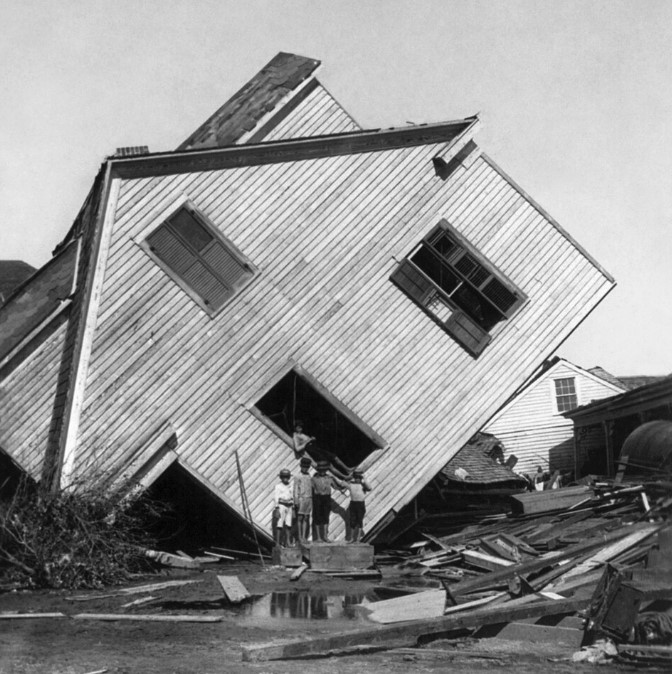
The 1900 Galveston Hurricane That Led to the Seawall
When a powerful hurricane struck Galveston Island on September 8, 1900, it became the deadliest natural disaster in U.S. history. Estimates suggest 6,000 to 8,000 people lost their lives, devastating a city of roughly 37,000 residents.
In response, Texas launched one of the largest civil engineering efforts of its time. The state approved construction of the Galveston Seawall in 1901, designed as a curved concrete barrier rising about 17 feet above sea level. Construction began in 1902 and was later expanded.
At the same time, much of the city was physically raised using millions of cubic yards of sand. The seawall proved effective during the 1915 hurricane, significantly reducing loss of life compared to 1900. While it altered Galveston’s shoreline over time, it remains one of the most important early examples of large-scale coastal protection in the United States.
The 1921 Central Texas Flood That Reshaped Flood Control
In September 1921, a tropical system moved inland and caused catastrophic flooding across Central Texas. Areas like Thrall recorded over 38 inches of rainfall in about 24 hours, one of the highest rainfall totals in U.S. history.
At least 200 people were killed statewide, with severe impacts in cities like Austin and San Antonio. In San Antonio, flooding along creeks such as San Pedro Creek and Alazán Creek caused significant loss of life, particularly in low-lying neighborhoods.
The disaster led to major flood control projects, including the construction of Olmos Dam (completed in 1928) and long-term investment in drainage systems, channel improvements, and flood planning across Central Texas.
The 1937 New London School Explosion That Changed Gas Safety
On March 18, 1937, the New London School in East Texas was destroyed by a natural gas explosion, killing nearly 300 students and teachers. The explosion was caused by a buildup of odorless natural gas that ignited from an electrical spark.
At the time, natural gas had no added scent, making leaks difficult to detect. In response, Texas required that odorants (mercaptan) be added to natural gas, giving it the recognizable “rotten egg” smell.
This safety measure quickly became standard across the United States and remains one of the most important public safety changes in modern infrastructure.
The 1947 Texas City Disaster That Transformed Industrial Safety
On April 16, 1947, a fire aboard the French ship SS Grandcamp in the Port of Texas City triggered a massive explosion of ammonium nitrate, killing nearly 600 people and injuring thousands.
A second explosion from another ship, the SS High Flyer, occurred later, compounding the devastation. The blasts destroyed much of the port and surrounding industrial facilities, including chemical plants.
This disaster led to significant changes in industrial safety regulations, emergency response planning, and the handling and storage of hazardous materials. It also influenced the development of modern disaster response systems and federal oversight of chemical transport.
The 1953 Waco Tornado That Advanced Warning Systems
On May 11, 1953, a devastating F5 tornado struck downtown Waco, killing 114 people and injuring hundreds. The tornado caused widespread destruction to businesses and homes, with damages exceeding $40 million at the time.
The disaster highlighted the need for improved forecasting and warning systems. It contributed to the advancement of radar technology and organized severe weather warning systems, which would later become standard across the United States.
The Waco tornado remains one of the deadliest in Texas history and a turning point in how communities prepare for severe weather.
Hurricane Harvey and Modern Flood Preparedness
When Hurricane Harvey made landfall near Port Aransas in August 2017 as a Category 4 storm, its greatest impact came from prolonged rainfall across Southeast Texas. Some areas recorded over 50 inches of rain, setting a U.S. record for a single tropical system.
Harvey caused an estimated $125 billion in damage, making it one of the costliest disasters in U.S. history. More than 200,000 homes and businesses were damaged, and tens of thousands of people required rescue.
The storm led to major investments in flood control infrastructure, reservoir management, and emergency response systems, particularly in the Houston region. It also reshaped discussions around urban development, drainage, and resilience in flood-prone areas.
Winter Storm Uri and Texas Infrastructure Challenges
In February 2021, Winter Storm Uri brought extreme cold temperatures across Texas, causing widespread power outages that affected more than 4 million residents. Temperatures dropped well below freezing for several days, overwhelming the state’s energy infrastructure and exposing vulnerabilities in the power grid.
The storm led to hundreds of deaths statewide, both directly and indirectly, and caused billions in damages. Frozen pipes, water system failures, and prolonged outages disrupted daily life across major cities including Houston, Dallas, Austin, and San Antonio.
Uri prompted significant changes in energy regulation, winterization requirements, and emergency planning, highlighting that Texas disasters are not limited to hurricanes and floods but also include severe winter weather events.
Why Texas Faces Frequent Billion-Dollar Disasters
Texas regularly experiences a high number of billion-dollar disasters, including hurricanes, hailstorms, floods, and droughts. Its size, population growth, and geographic diversity contribute to increased exposure to extreme weather.
Severe storms and hail frequently impact major cities like Dallas, Houston, and San Antonio, while coastal areas remain vulnerable to hurricanes. Drought cycles also affect agriculture and water supply across the state.
These patterns have led to increased investment in resilient infrastructure, early warning systems, and disaster preparedness planning, as Texas continues to adapt to a wide range of natural hazards.
Travel Preparedness Tips for Visiting Texas
Understanding Texas’s disaster risks can help visitors travel more safely and confidently.
Check weather forecasts regularly, especially during hurricane season (June–November) and spring storm season. In coastal areas, be aware of evacuation routes and local emergency alerts. In Central Texas, avoid low-water crossings during heavy rain, as flash flooding can occur quickly.
During summer, prepare for extreme heat by staying hydrated and limiting outdoor activity during peak hours. In winter, monitor conditions for rare but impactful cold events.
Having a flexible itinerary, keeping emergency supplies in your vehicle, and staying informed through local alerts can make a significant difference when traveling across Texas.